Can Cats Eat Pizza? – Ingredients, Risks, and Safer Options
Pizza night is exciting, and if you have a cat, you’ve probably noticed those curious eyes watching every bite. The smell of melted cheese and warm toppings can easily attract your furry friend, making you wonder if sharing a small piece is harmless.
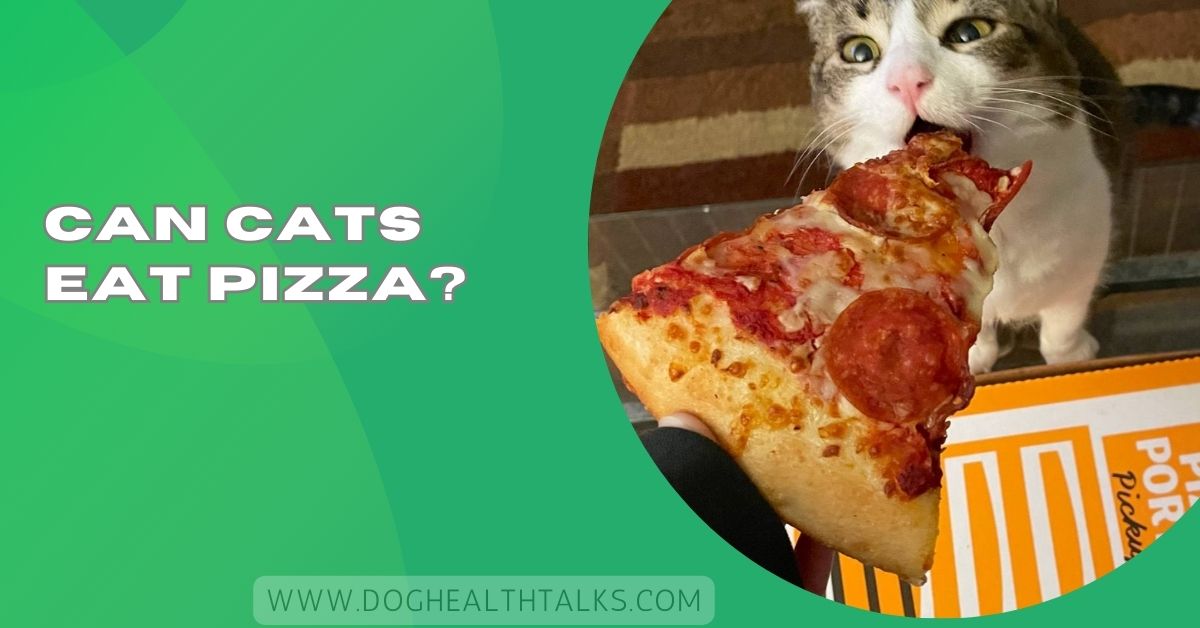
Cats should not eat pizza. Pizza is generally unsafe for cats and can cause stomach upset. A tiny bite of plain cooked crust is usually harmless, but pizza is not a healthy or recommended food for cats.
Before letting your cat taste pizza, it’s important to understand how it can affect their health and whether it’s truly worth the risk.
Can Cats Have Pizza?
Cats are naturally curious, especially when strong smells like pizza fill the room. If your cat sniffs your slice or tries to sneak a bite, you might wonder if sharing is harmless. While pizza is comforting and delicious for humans, it is not made for feline bodies.
Cats are obligate carnivores, meaning their bodies are designed to get nutrients mainly from animal-based protein. Pizza is a human food built around carbs, fats, dairy, and seasonings. Even when pizza looks simple, almost every part of it works against a cat’s digestive system.
A tiny accidental nibble may not cause immediate harm, but pizza should never be offered intentionally. Making it a habit can quietly lead to digestive upset, weight gain, or toxic reactions over time.
Interesting Facts About Pizza
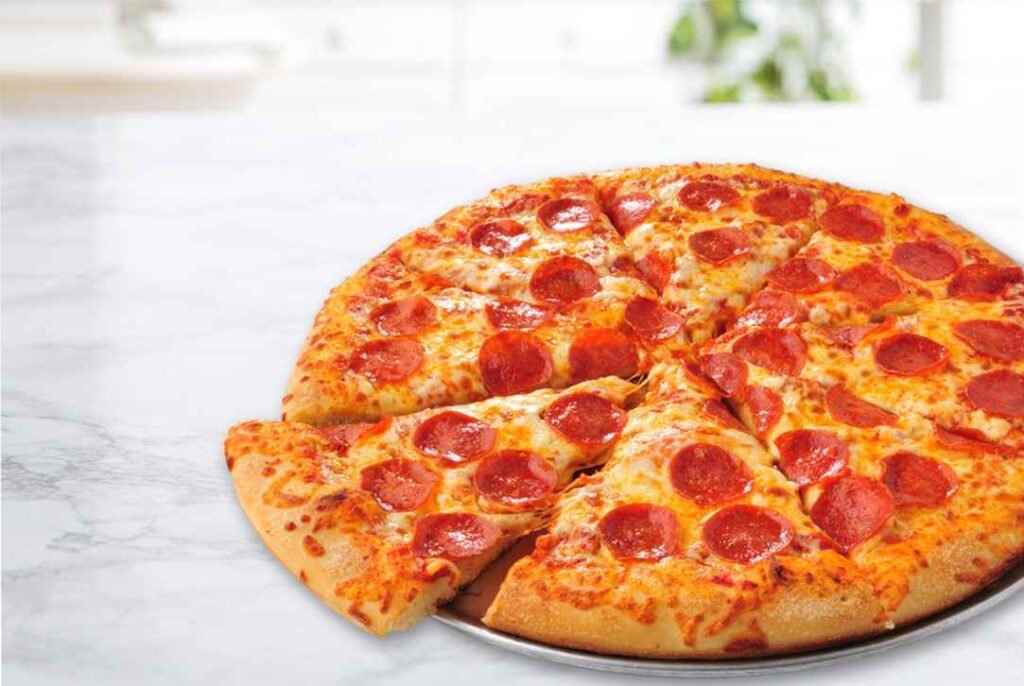
Pizza is one of the most loved foods in the world, especially in households where pets live close to their humans.
- The word “pizza” dates back to the year 997 in Italy.
- In the U.S., hundreds of slices are eaten every second.
- Pepperoni is the most popular topping.
- The smell of pizza comes from fats, cheeses, and meats—exactly the aromas that attract cats.
Cats are not craving pizza because it is good for them. They are reacting to the strong scent of animal protein and fat, which triggers natural hunting instincts. Unfortunately, attraction does not equal safety.
Nutritional Contents of Pizza
From a nutrition standpoint, pizza offers almost nothing a cat needs.
Pizza is typically high in:
- Refined carbohydrates
- Saturated fats
- Sodium (salt)
- Calories
Cats, on the other hand, need:
- High-quality animal protein
- Taurine (an essential amino acid)
- Controlled fat levels
- Very low carbohydrates
Pizza lacks taurine and contains excess calories, salt, and fat. Even a small amount can disrupt a cat’s carefully balanced diet.
A complete and balanced cat food approved by veterinary nutrition standards is far better suited to keep your cat healthy, active, and comfortable.
Also Read: Can Cats Eat Sashimi? – Risks, Facts, and Safe Alternatives
What Does Pizza Contain?
To understand why pizza is unsafe, let’s break down its most common ingredients and how each one affects cats.
Pizza Dough
Cooked pizza dough is mostly carbohydrates, which cats do not need. It offers no nutritional value and can contribute to weight gain.
Raw pizza dough is far more dangerous. It contains yeast that can expand in a cat’s stomach, leading to painful bloating. As yeast ferments, it produces alcohol, which can enter the bloodstream and cause alcohol poisoning. This is a veterinary emergency.
Dough also contains salt, which cats only need in very small amounts.
Tomato Sauce
Ripe tomatoes themselves are not highly toxic, but pizza sauce is rarely just tomatoes.
Most sauces include:
- Garlic
- Onions
- Salt
- Herbs and spices
Garlic and onions are toxic to cats. They can damage red blood cells and cause anemia. Even small amounts consumed repeatedly can lead to weakness, pale gums, lethargy, and digestive distress.
Cheese
Cheese smells amazing to cats, but it is one of the most misleading ingredients.
Most adult cats are lactose intolerant. Cheese can cause:
- Diarrhea
- Gas
- Vomiting
- Stomach pain
Cheese is also high in fat and calories. Regular exposure increases the risk of obesity, joint strain, and long-term health issues.
Pepperoni
Pepperoni is one of the most dangerous pizza toppings for cats.
It contains:
- Extremely high salt levels
- Garlic and spices
- Preservatives like nitrates
- Excess fat
Too much salt can lead to dehydration, tremors, vomiting, seizures, and even coma. Pepperoni also irritates a cat’s digestive system and provides calories without nutrition.
Must Read: Can Cats Eat Vanilla Ice Cream? – Safety, Risks & Vet Advice
Is Pizza Safe for Cats?
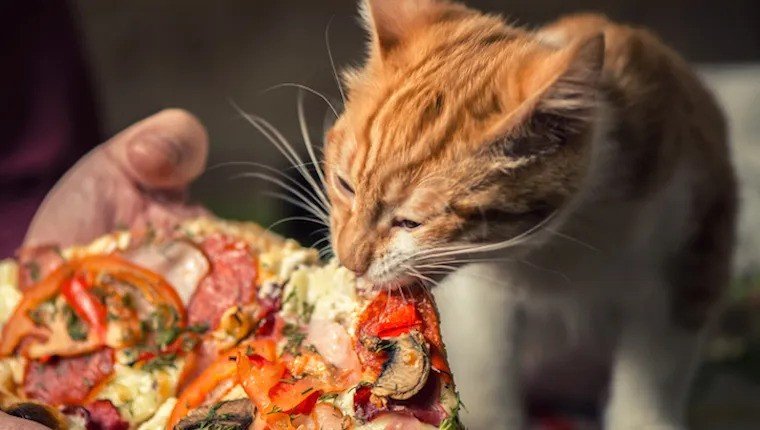
In general, pizza is not safe for cats.
Most pizzas contain at least one harmful ingredient, and many contain several. Even “plain” pizza usually includes cheese, salt, and sauce that can upset a cat’s stomach.
Veterinary professionals agree that pizza offers more risk than reward. Cats do not benefit nutritionally from pizza, and repeated exposure increases health concerns.
If your cat steals a tiny bite once, it is unlikely to be life-threatening. However, pizza should never become a treat or routine snack.
Potential Health Risks
Feeding pizza to cats, even occasionally, can cause both short-term and long-term problems.
Common risks include:
- Digestive upset: vomiting, diarrhea, gas
- Toxic reactions: garlic, onion, or spice exposure
- Salt overload: dehydration, tremors, seizures
- Obesity: excess calories from cheese and dough
- Food intolerance: reactions to dairy or meats
Cats are small animals. Ingredients that seem harmless to humans can overwhelm their systems very quickly.
Guidelines for Feeding Pizza to Cats
The safest guideline is simple: don’t feed pizza to cats.
However, if your cat accidentally eats a small piece:
- Remove access to more food
- Watch for vomiting, diarrhea, or lethargy
- Contact your vet if symptoms appear
If you want to share a food experience with your cat, consider safer alternatives:
- Cooked plain chicken or turkey
- Small pieces of cooked fish (no seasoning)
- Scrambled or boiled eggs
- Vet-approved cat treats
Some owners choose to make a “cat-friendly pizza” using safe ingredients like cooked meat and vegetables without salt, garlic, or cheese. This should always be an occasional enrichment activity, not a meal replacement.
Treats should make up no more than 10% of a cat’s daily calories.
Talk To Your Vet
Every cat is unique. Age, weight, health conditions, and food sensitivities all matter.
Before offering any human food, including pizza alternatives, it’s best to talk with your veterinarian. A vet can:
- Confirm what foods are safe
- Help manage food sensitivities
- Create a balanced nutrition plan
Veterinary advice is especially important if your cat has kidney disease, obesity, digestive disorders, or allergies.
Can Cats Eat Pizza Crust
Cats should not eat pizza crust. Plain cooked crust is not toxic, but it has no nutrition for cats. It is full of carbs and salt and may cause stomach upset if eaten often or in large amounts.
You Should Know: Can Cats Drink Soda? – Risks Every Pet Owner Should Know!
Can Cats Eat Pizza Toppings
Most pizza toppings are unsafe for cats. Toppings like onions, garlic, spices, and salty meats can upset a cat’s stomach or cause serious health problems. It’s best to keep all pizza toppings away from cats.
Can Cats Eat Pizza Cheese
Cats should not eat pizza cheese. Most cats are lactose intolerant, so cheese can cause diarrhea, gas, or vomiting. Cheese is also high in fat and salt, which is unhealthy for cats over time.
Can Cats Eat Pizza Sauce
Pizza sauce is not safe for cats. It often contains garlic, onions, salt, and spices that can be toxic. Even small amounts of pizza sauce can cause stomach upset or lead to more serious health issues.
Can Cats Eat Pizza Pepperoni
Pepperoni is very bad for cats. It is high in salt, fat, and spices and often contains garlic. Eating pepperoni can cause vomiting, dehydration, or salt poisoning, so cats should never eat it.
Can Dogs Eat Pizza
Dogs should not eat pizza either. Pizza is high in fat, salt, and seasonings that can upset a dog’s stomach. Ingredients like garlic and onions can be harmful, making pizza a poor choice for dogs.
Can Kittens Eat Pizza Crust
Kittens should never eat pizza crust. Their stomachs are very sensitive, and crust offers no nutrition. Even small amounts can cause diarrhea or stomach pain and may affect their healthy growth.
FAQs
Can cats have a tiny piece of pizza?
A tiny bite is unlikely to harm, but pizza is unhealthy and should not be given to cats.
Can cats eat Domino’s pizza?
No, Domino’s pizza contains cheese, salt, garlic, and spices that can upset or harm cats.
What happens if my cat ate pizza?
Your cat may get vomiting, diarrhea, gas, or stomach pain, depending on the ingredients eaten.
What is the 3-3-3 rule for cats?
It explains cat adjustment: three days to decompress, three weeks to learn routine, three months to feel safe.
What is the silent killer of cats?
Kidney disease is often called the silent killer because symptoms appear very late.
What annoys cats the most?
Loud noises, forced cuddles, dirty litter boxes, sudden changes, and ignoring their boundaries annoy most cats.
What is the one meat to never feed a cat?
Processed meats like pepperoni or sausage should never be fed due to salt, spices, and preservatives.
What is a cat’s absolute favorite food?
Most cats love high-protein foods like cooked chicken, turkey, or fish because of the strong smell.
Conclusion
Pizza may look tempting to your cat, but it is not a safe or healthy choice. From salty toppings to cheesy layers and garlicky sauces, pizza contains ingredients that can upset your cat’s stomach or cause serious health problems. While a tiny accidental bite is usually not an emergency, pizza should never become a treat or habit. Cats thrive on simple, protein-rich foods made for their unique needs. The best way to show love is by choosing safe, vet-approved foods that keep your cat healthy, happy, and by your side for years to come.